
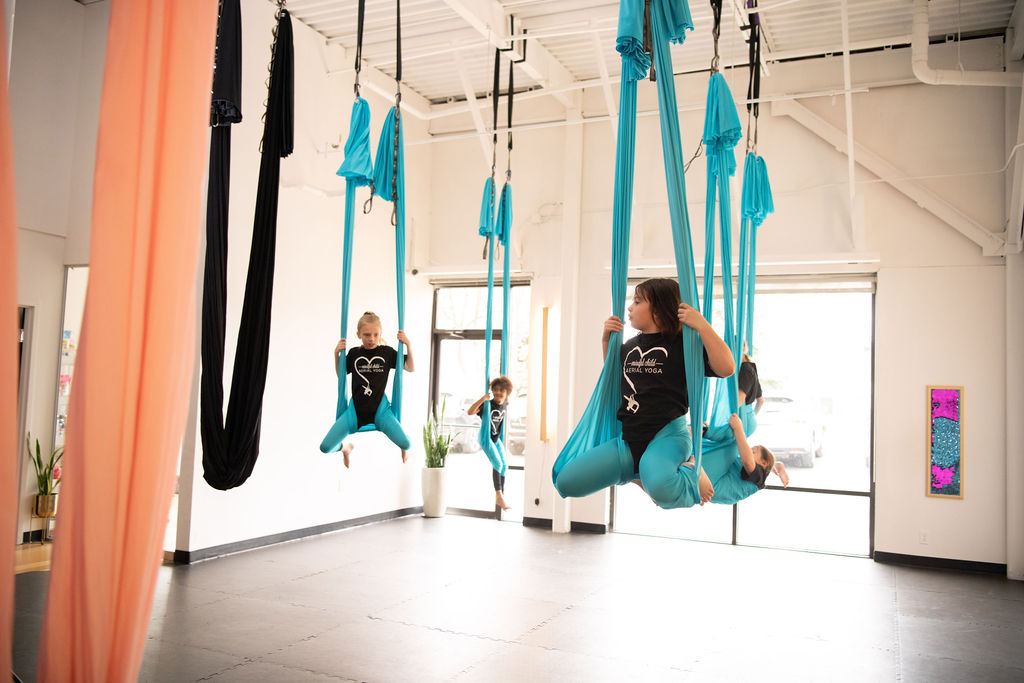
Yoga versus aerial yoga, is there a difference? Yoga is a timeless practice that has been cherished for centuries. It involves poses and breathing exercises on a mat.
Aerial yoga, on the other hand, is a modern twist. It uses a hammock to perform poses, adding an element of fun and challenge.
Both forms offer numerous benefits. They improve flexibility, strength, and mental well-being.
Parents are increasingly interested in kids aerial yoga. It provides a playful and engaging way for children to stay active.
This article will explore the differences between traditional yoga and aerial yoga. We’ll also discuss their benefits and suitability for different age groups.
What is Traditional Yoga?
Traditional yoga is a practice steeped in history. It involves a sequence of poses and breath control on a mat.
There are many styles. Popular ones include:
- Hatha: Focuses on balance and gentle movements.
- Vinyasa: Known for its dynamic flow and coordination.
- Ashtanga: A more intense form, syncing movement with breath.
Traditional yoga is accessible to all, regardless of age or fitness level. It emphasizes mindfulness and meditation, fostering a sense of inner peace.
People often practice it barefoot. It requires minimal equipment, making it easy to do at home or in studios.
Yoga practitioners appreciate its grounding effect, helping to center mind and body.
What is Aerial Yoga?
Aerial is a modern twist on traditional practices. It combines yoga, acrobatics, and Pilates using a hammock or silk.
The hammock supports the body, allowing practitioners to explore poses in the air. This offers a unique, engaging experience.
Aerial features elements of dance. Some classes incorporate music for a dynamic practice.
Benefits of aerial yoga include:
- Enhanced core strength.
- Improved balance and flexibility.
- Alleviation of back pain.
Aerial provides a full-body workout. It’s visually stunning and often shared on social media.
While it offers support, aerial yoga can be more physically demanding. It’s beneficial for those seeking to challenge their fitness routine.
Key Differences
Traditional and aerial yoga share many benefits but differ in technique and equipment. Aerial yoga requires a specialized hammock, while traditional yoga only needs a mat.
Traditional yoga is rooted in ancient practices. It’s accessible to people of all fitness levels and ages.
In contrast, aerial yoga is a modern adaptation. It melds elements of yoga with acrobatics and dance.
A key difference is the physical demand. Aerial yoga can be more rigorous due to the instability of the hammock.
Key distinctions include:
- Equipment: Mat vs. hammock.
- Physical demand: Low impact vs. intense.
- Style: Traditional movements vs. acrobatic.
Traditional yoga is widely available and easy to practice at home. Meanwhile, aerial yoga may require special instruction and space.
Choosing between them depends on personal goals. Each style offers unique experiences and benefits.
Yoga Benefits: Traditional and Aerial Compared
Both offer extensive health benefits. Each style enhances physical, mental, and emotional well-being.
Traditional yoga improves flexibility, posture, and mindfulness. It focuses on controlled breathing and meditation.
Aerial yoga, with its unique apparatus, boosts core strength and balance. The hammock assists in relieving pressure from the spine.
Both practices can lower stress and elevate mood. Regular yoga sessions of any kind can enhance body awareness and respiratory function.
Benefits include:
- Enhanced flexibility and strength
- Improved posture and balance
- Reduction in stress and anxiety
- Increased mental clarity and focus
Both emphasize spiritual growth and offer a dynamic, physically demanding workout. Each form can significantly enrich one’s quality of life.
Kids: A Fun and Engaging Option
Kids aerial is catching on as an exciting physical activity. It blends exercise with play, enticing children into fitness.
With its use of hammocks, it promotes strength and coordination. The interactive nature keeps children engaged and curious.
Aerial for kids is more than physical. It fosters creativity and confidence, as they learn to master new movements.
Here are some benefits of kids:
- Increases strength and flexibility
- Enhances coordination and balance
- Boosts confidence and creativity
- Provides fun and interactive engagement
Parents find it appealing for its safe, supportive environment. The hammock cushions and guides young bodies, ensuring a secure practice.
Which is Right for You or Your Child?
Choosing depends on personal goals and preferences. Each practice offers unique benefits tailored to different needs.
Consider the physical demands and interests. Aerial yoga suits those seeking a dynamic and challenging workout. It’s ideal for adventurous individuals.
Traditional yoga is perfect if you’re interested in a meditative, grounding practice. It’s accessible to all ages and offers a gentle approach.
Factors to consider when choosing:
- Level of fitness and experience
- Personal interests and goals
- Specific health concerns
- Availability of classes and equipment
Discuss options with a instructor. They can guide you to the practice that fits your lifestyle. Whether for yourself or your child, selecting the right form ensures a rewarding experience.

Getting Started: Tips for Beginners
Embarking on a new exercise journey requires preparation and an open mind. Beginners should focus on understanding the fundamentals and building confidence.
Start by researching local studios that offer beginner classes. Join a class that aligns with your interest.
Here are some tips to help you get started:
- Wear comfortable, flexible clothing
- Bring a yoga mat
- Listen to your body and take breaks when needed
Remember, consistency is key. Regular practice builds strength, flexibility, and mindfulness over time. Enjoy the process and celebrate small victories along the way.
Conclusion
Each offer unique experiences and benefits. Traditional yoga’s rich history emphasizes mindfulness and inner peace, appealing to those seeking mental clarity and spiritual growth. Aerial yoga combines acrobatics with traditional poses, providing a dynamic workout that improves core strength and balance. But no need to choose between them when you visit our Mindful Child studio as we combine them both!
When choosing between them, consider personal goals and preferences. Traditional yoga is accessible for all ages and fitness levels, while aerial yoga is perfect for those eager to explore new challenges. Regardless of choice, both forms contribute to improved well-being and a healthier lifestyle. Whether on a mat or in a hammock, the journey of yoga can enrich life in countless ways.
Try out a combination of both at one of our camps!