
Aerial Hammock at Home for Kids
Imagine giving your child the gift of flight, right in the comfort of your own living room or playroom. In an era where screen time often dominates our children’s daily routines, finding indoor activities that actively engage their bodies and minds is a priority for many parents. Enter the world of suspended movement. Installing an aerial hammock for kids at home is becoming one of the most popular ways to encourage physical fitness, imaginative play, and emotional regulation.
Whether your child is an aspiring acrobat or simply needs a cozy, quiet space to decompress after a long school day, a suspended silk offers unparalleled versatility. However, before you hang a beautiful swath of fabric from your ceiling, it is crucial to understand the equipment, safety protocols, and therapeutic advantages. Here is your comprehensive guide to setting up and enjoying an at-home aerial space for your children.
The Magic of Airborne Play: Physical and Mental Benefits
An indoor fabric swing is far more than a fun toy; it is a powerful developmental tool. When children engage with aerial arts, they are secretly doing complex physical and neurological work.
Building Strength and Body Awareness
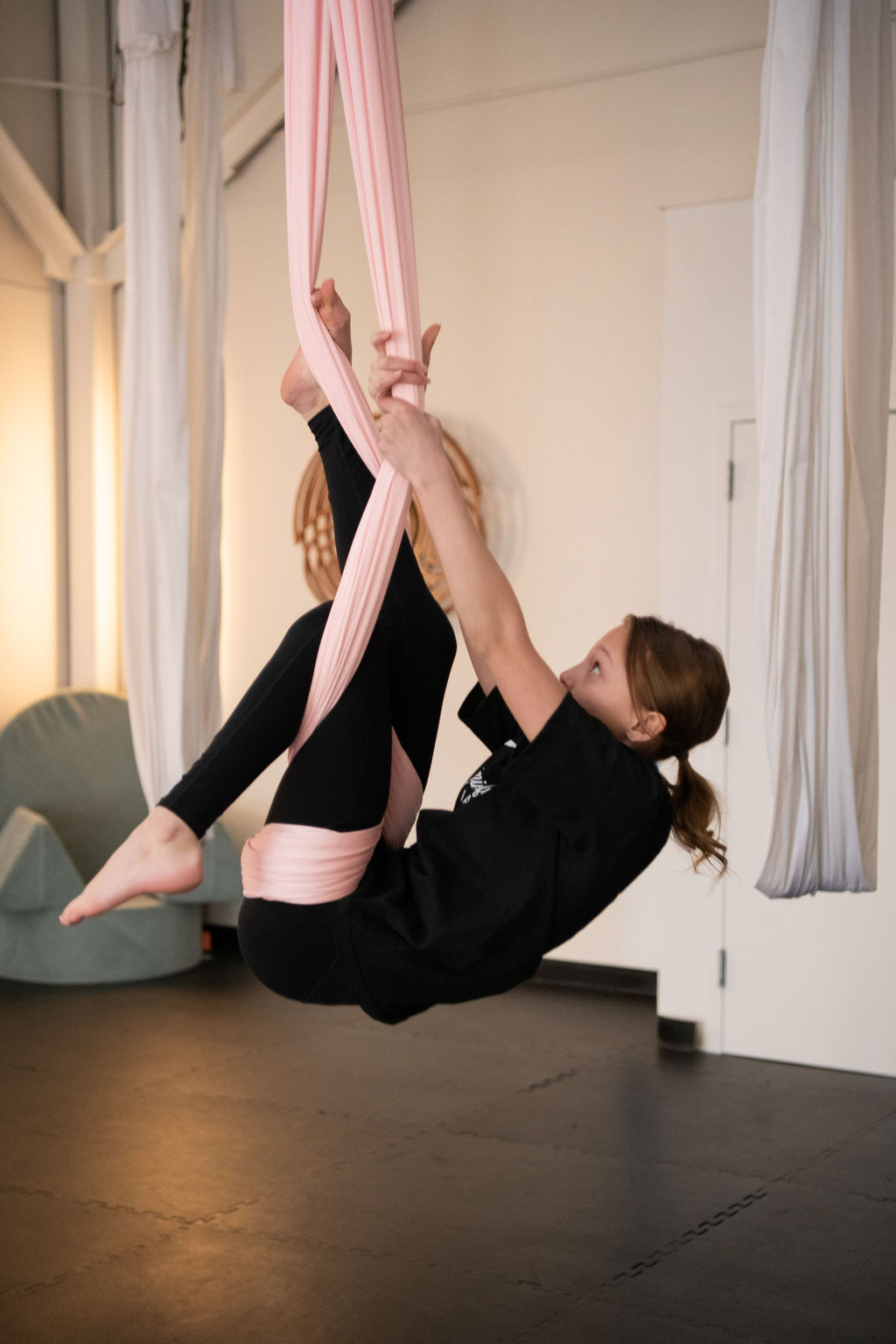
The practice of aerial yoga for kids offers a unique full-body workout. Unlike traditional sports that rely on pushing off solid ground, moving in the air requires children to stabilize themselves in a multidimensional space. As they climb, twist, and hold themselves up, they are developing core stability and balance. Gripping the fabric strengthens their hands and forearms, while wrapping their legs around the silk builds lower-body endurance.
Therapeutic and Sensory Advantages
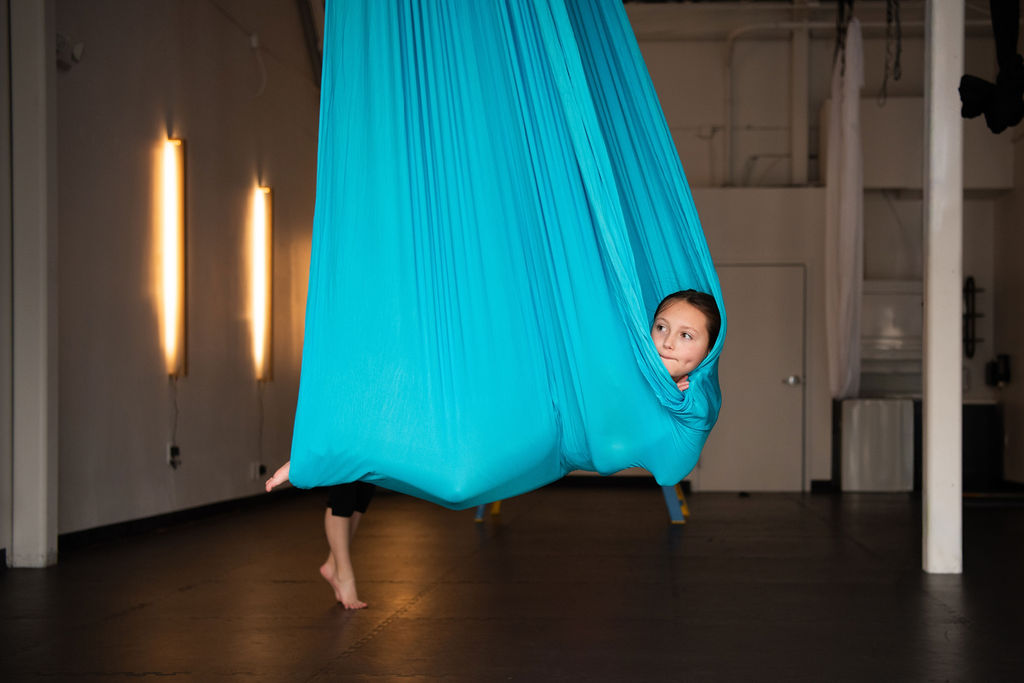
Beyond physical fitness, the sensory integration swing benefits are profound. For children who easily become overwhelmed by their environment, the snug, cocoon-like embrace of a fabric hammock provides deep touch pressure therapy. This deep pressure has a documented calming effect for neurodivergent children, including those with Autism Spectrum Disorder (ASD) or Attention Deficit Hyperactivity Disorder (ADHD).
Furthermore, pulling, pushing, and hanging from the fabric serve as excellent proprioceptive input exercises. Proprioception is our body’s ability to sense its location, movements, and actions. By providing heavy work for the muscles and joints, an indoor kids hammock swing helps children regulate their nervous systems, leading to better focus, reduced anxiety, and improved emotional stability.
Choosing the Right Equipment
Not all indoor swings are created equal. To ensure safety and maximize the benefits, you need to understand the different materials and styles available on the market.
Fabric Matters: Nylon Tricot vs Polyester Fabric
When shopping, you will likely encounter two primary fabric choices. Nylon tricot is the gold standard for aerial arts. It offers a beautiful two-way stretch—meaning it stretches slightly sideways to contour the body but remains supportive and taut vertically. This makes it comfortable for lounging and safe for climbing.
On the other hand, polyester fabric (often marketed as “parachute material”) is highly durable but typically offers zero stretch. While polyester is fine for a basic outdoor camping hammock, it does not provide the same therapeutic deep-pressure embrace or the comfort needed for aerial tricks.
Style Selection: Sensory Swing vs Yoga Trapeze
Parents often wonder about the difference between a sensory swing vs yoga trapeze. A sensory swing is typically a single, continuous loop or a teardrop-shaped pod made of stretchy fabric, designed primarily for cocooning, gentle swinging, and deep pressure therapy.
A yoga trapeze, however, includes the main sling but is flanked by sets of foam handles at varying lengths. While a trapeze is excellent for building upper body strength and practicing inversions, a standard seamless silk or sensory swing is generally safer and more versatile for younger children, as there are fewer straps to get tangled in.
Hardware and Rigging Quality
Never compromise on hardware. Make sure every component of your setup — from the ceiling mount to the carabiners — meets the standards required for occupational therapy sensory equipment. Pay close attention to the safety ratings of your carabiners, which should be industrial grade and marked with a KN (kilonewton) rating. This rating confirms that the carabiners can withstand thousands of pounds of force without bending or breaking.
What Age Can Children Start Aerial?
A common question among parents is: what age can children start aerial? It all comes down to the individual setup and where the child is in their development.
Toddlers as young as two or three can enjoy a low-hanging sensory pod for gentle swinging and resting, provided they are strictly supervised. For structured aerial yoga classes or practicing specific poses at home, ages four to six are generally when children have developed the necessary listening skills, body awareness, and grip strength. Complex inversions and drops should be reserved for older children (8+) who are taking professional classes and practicing at home under attentive supervision. At Mindful Child, we do not recommend doing higher level poses or drops in a home environment unless an aerial instructor is present.
Setting Up Your Home Studio Safely
The most critical aspect of your at-home aerial journey is the installation. An overhead swing exerts dynamic force on your ceiling, meaning a child swinging weighs significantly more in motion than they do standing still.
Understanding Ceiling Limits
When calculating the weight capacity for overhead suspension, you must account for this dynamic load. Make sure the ceiling mount and the structural beam it attaches to can support at least 300 to 500 pounds to handle swinging, bouncing, and the occasional adult who might want to test it out.
****Safe Rigging for Drywall Ceilings
You cannot simply screw a ceiling mount into drywall or plaster; the weight will immediately pull it out, resulting in serious injury. Safe rigging for drywall ceilings requires locating the solid wood structural joists hidden above the drywall. If your joists are exposed, installation is straightforward. If they are hidden behind drywall, you will need a high-quality stud finder.
Step-by-Step Installation Instructions
Hire a licensed contractor and make sure to test how much weight the structural beam can safely hold.
Adjusting the Height
Knowing how high to hang yoga silk is vital for safety. For children, the bottom of the fabric loop should hang roughly at their hip or waist level when they are standing next to it. If the swing is purely for sensory cocooning and reading, you can hang it even lower—just a few inches off the floor, allowing them to crawl in easily without a step stool.
Getting Started: Fun, Safe, and Comfortable Movements
Once your installation is complete and safety tested, it is time for your child to explore.
Easing Into the Experience
While the hammock is incredibly fun, spinning too fast can ruin the experience. Preventing spinning motion sickness is essential, especially during the first few weeks. Encourage your child to keep their eyes open and focus on a stationary object in the room while swinging. Limit initial sessions to 10–15 minutes to allow their vestibular system to adapt to the new sensations.
Beginner Poses for Young Flyers
Start with simple, ground-supported movements, before encouraging them to lift their feet off the floor completely.
- The Cozy Cocoon: The simplest and most therapeutic pose. The child spreads the fabric wide and sits inside, pulling the edges over their head and feet. This is perfect for reading a book or listening to an audiobook.
- The Flying Superkid: The child lays on the fabric with their entire body in the hammock except for their arms and head. This is excellent for back and core strength.
- The Splash: While sitting in the fabric like a standard swing, the child pushes the fabric out behind their knees. They lean back, gripping the sides of the silk, and straddle their legs wide, looking up at the ceiling.
- Supported Downward Dog: With the fabric acting as a sling across their hips, the child reaches forward to place their hands on the ground, walking them out until their feet lift slightly off the floor. This provides a gentle, supported inversion that stretches the spine.
A Lifelong Love of Movement
Creating an at-home aerial space provides a unique sanctuary for your child. It is a place where fitness meets imagination, and where sensory needs are met with a comforting embrace. With the right materials, safety guidelines, and gradual movements, your hammock will be a safe and relaxing spot for your child.
Whether they’re hanging upside down, flying like a superhero, or hiding away in a cocoon, an aerial hammock will quickly become your child’s favorite play place. Aerial yoga fosters physical health, emotional wellness, and boundless joy.