
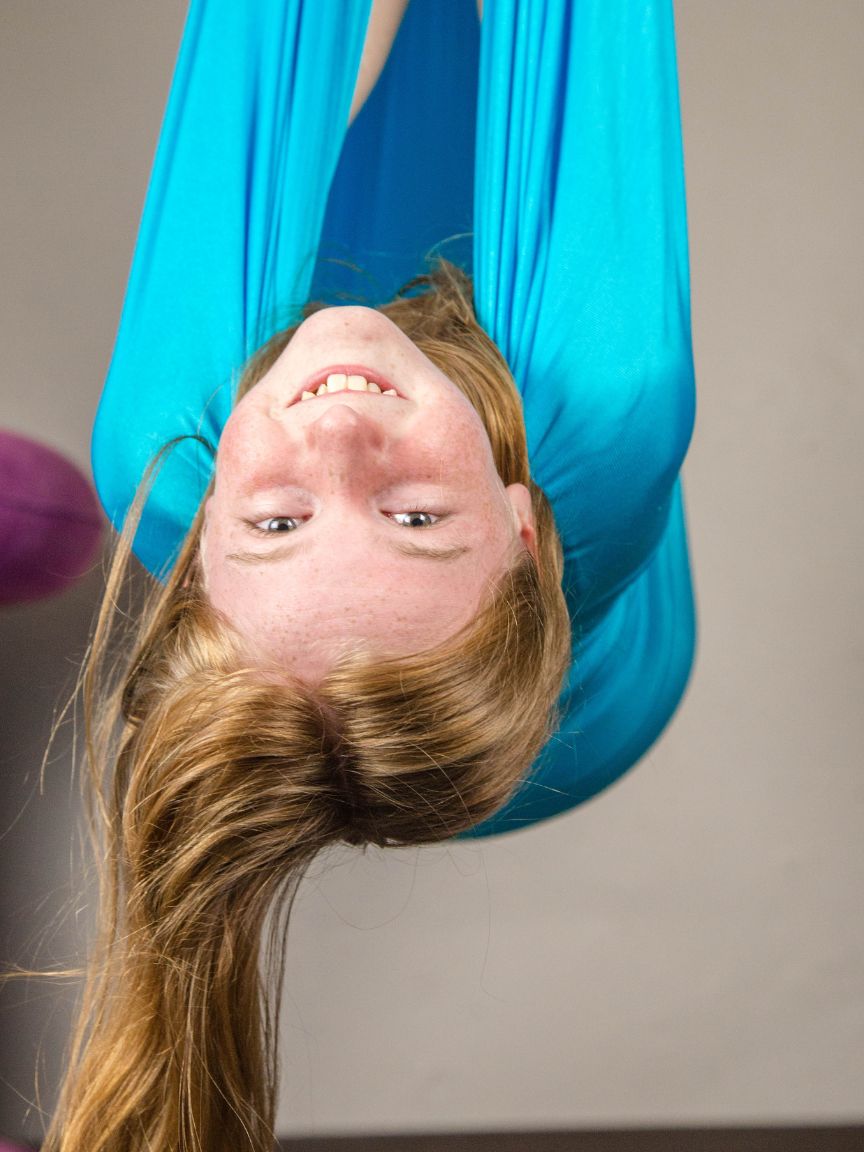
Kid’s Primitive Reflex Integration with Aerial Yoga Hammock
An infant grips your finger with surprising strength. A baby startles at a loud noise, flinging their arms wide. These are not just random movements; they are primitive reflexes. These are automatic, involuntary actions essential for a baby’s survival and early development. But what happens when these reflexes stick around longer than they should? Retained primitive reflexes can impact a child’s learning, coordination, and behavior. Fortunately, innovative and enjoyable methods like combining an aerial yoga hammock with play-based therapy can help.
This guide explores the world of primitive reflex integration. You will learn what these reflexes are and why helping them integrate is crucial for healthy child development. We will also dive into how an aerial yoga hammock becomes a powerful tool in this process, especially when paired with the power of play.
What Are Primitive Reflexes?
Primitive reflexes are automatic movement patterns that originate in the brainstem. They are present at birth and are critical for a newborn’s survival. For instance, the rooting reflex helps a baby find a food source, while the Moro (or startle) reflex is a protective response.
As a child grows, these early reflexes should naturally fade or “integrate” into the nervous system. This integration allows for more mature, voluntary movements and higher-level brain functions to develop. When they don’t integrate, they are considered “retained.”
Why Is Primitive Reflex Integration Important?
A child with retained primitive reflexes might struggle with tasks that seem simple to their peers. The continued presence of these involuntary movements can interfere with motor control, sensory processing, and even academic skills.
Think of it like trying to build a house on an unstable foundation. Without the solid base of integrated reflexes, higher-level skills can be shaky.
Signs of retained primitive reflexes can include:
- Poor balance and coordination
- Difficulty with fine motor skills like writing or tying shoes
- Sensory sensitivities (to touch, sound, or light)
- Challenges with focus and attention
- Trouble with reading, like skipping lines or losing their place
- Emotional regulation difficulties
Integrating these reflexes helps rebuild that foundational level of the central nervous system. This process allows a child to move with more control, process sensory information more effectively, and free up brainpower for learning and social engagement.
The Power of Aerial Yoga for Kids in Therapy
An aerial yoga hammock is more than just a swing; it’s a dynamic therapeutic tool. This suspended, soft fabric cocoon offers a unique environment that supports primitive reflex integration in several key ways. The hammock provides a combination of sensory inputs that are essential for neurological development.
Vestibular and Proprioceptive Input
The gentle swinging, spinning, and rocking motions in an aerial hammock directly stimulate the vestibular system, which is responsible for our sense of balance and spatial awareness. This system is closely linked to the integration of many primitive reflexes, such as the Moro and Asymmetrical Tonic Neck Reflex (ATNR).
At the same time, the deep pressure the hammock provides when a child is wrapped inside stimulates the proprioceptive system. This is our body’s ability to sense its position in space. The gentle squeeze of the fabric can be incredibly calming and organizing for the nervous system, helping a child feel grounded and secure.
Integrate Reflexes Using Aerial Hammock
A Safe and Supportive Environment
For a child who struggles with motor control or balance, the ground can feel unpredictable. The aerial hammock provides support, reducing the fear of falling and allowing the child to explore movement with confidence. This secure space encourages them to try new positions and challenge their bodies in ways they might not on a solid surface. This perceived safety is vital for effective play-based therapy.
Combining Aerial Yoga Hammock with Play-Based Therapy
While the hammock itself is beneficial, the real magic happens when it’s used within a play-based therapy framework. Play is the natural language of children. It is how they learn, explore, and make sense of the world. When therapy feels like play, children are more motivated, engaged, and receptive.
Using a play-based approach with an aerial hammock transforms child development exercises from chores into adventures. The therapist’s role is to guide this play, creating fun scenarios that naturally encourage the specific movements needed for reflex integration. Instead of saying, “Now, let’s work on your ATNR,” a therapist might say, “Let’s pretend you’re a superhero flying through the city and you have to look for villains on both sides!”
Child Development Exercises in the Aerial Hammock
Here are examples of how specific primitive reflexes can be addressed through playful activities in an aerial yoga hammock.
1. The Moro Reflex (Startle Reflex)
A retained Moro reflex can lead to anxiety, sensory overload, and emotional reactivity. The goal is to help the child feel secure and manage their startle response.
Play Scenario: The Cocoon. The child lies in the hammock, wrapped snugly like a caterpillar in a cocoon. The therapist gently and slowly rocks the hammock. As the child relaxes, the therapist can introduce small, controlled “surprises,” like a soft sound or a gentle tap on the hammock, teaching the nervous system to respond without overreacting.
Play Scenario: The Falling Star. The child lies on their back in the hammock and pushes off the floor to create a slow swinging motion. As they swing forward, they reach their arms and legs out wide like a star, then pull them back in as they swing back. This mimics the Moro pattern in a controlled, fun way.
2. The Asymmetrical Tonic Neck Reflex (ATNR)
Often called the “fencer’s pose,” a retained ATNR can affect hand-eye coordination, handwriting, and the ability to cross the body’s midline.
Play Scenario: Superhero Flight. The child lies on their stomach in the hammock, “flying” like a superhero. The therapist places toys or targets on either side of them. The child must turn their head to look at a target and reach for it with the corresponding hand, which encourages the separation of head and arm movements.
Play Scenario: Painting the Sky. While sitting or standing in the hammock, the child holds a paintbrush or ribbon wand. They practice “painting” large figure-eights in the air in front of them, an activity that requires crossing the midline and improves bilateral coordination.
3. The Spinal Galant Reflex
This reflex is associated with hip rotation. A retained Spinal Galant can contribute to fidgeting, bedwetting, and poor posture.
Play Scenario: The Log Roll. While snugly wrapped in the hammock just above the floor, the child pretends to be a log rolling down a hill. They initiate the movement from their core and hips, rolling from side to side inside the fabric. This helps integrate the reflex by providing controlled stimulation along the spine.
Play Scenario: Mermaid Swish. The child sits in the hammock with their legs together. They pretend to be a mermaid, swishing their “tail” from side to side to propel the hammock. This movement encourages coordinated hip rotation.
A New Path for Child Development
Using an aerial yoga hammock within a play-based therapy model offers a refreshing and highly effective approach to primitive reflex integration. It meets children where they are, transforming challenging work into joyful exploration. This method not only addresses the underlying neurological patterns but also builds a child’s confidence, motor skills, and love for movement.
By providing the right sensory input in a secure and engaging environment, we can help children build a stronger foundation for lifelong learning and well-being. The hammock becomes a partner in play, helping to untangle the neurological knots that may be holding a child back.
If you are a parent or therapist looking for an innovative way to support child development, consider exploring this powerful combination. It’s an opportunity to turn therapy into an adventure and help a child swing, spin, and soar toward their full potential. Register for a class, camp or occupational therapy at Mindful Child Aerial Yoga. we specializes in in using the aerial yoga hammock to integrate primitive reflexes.