
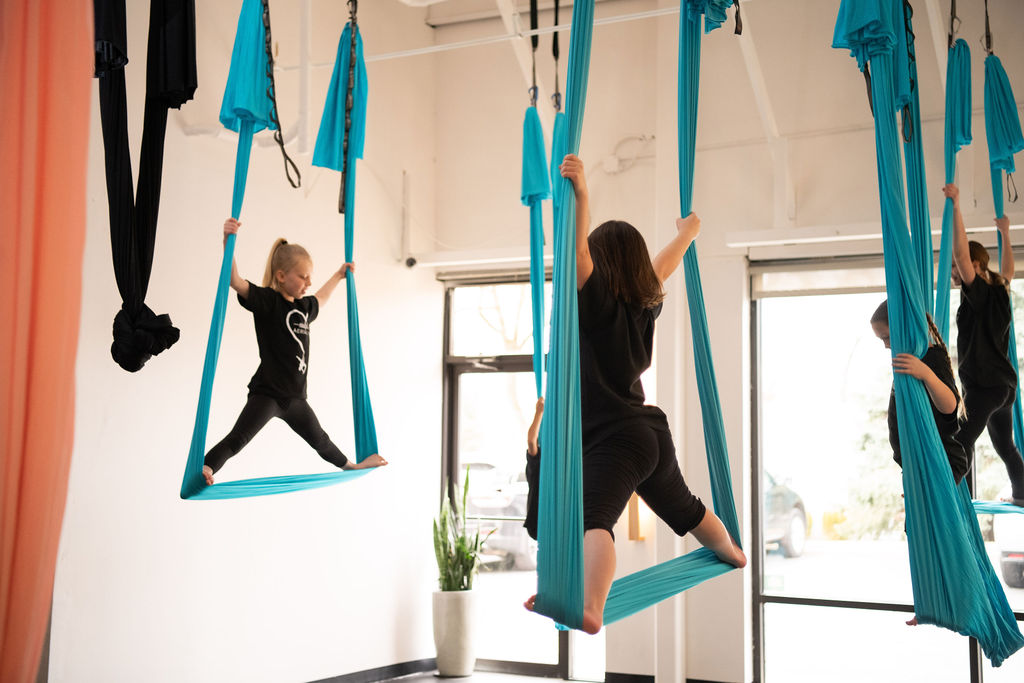
Benefits of Aerial Yoga for Children
In recent years, the approach to children’s physical and mental wellness has evolved dramatically. While traditional sports and ground-based activities are excellent, many parents are searching for alternative ways to help their children build strength, confidence, and mindfulness in a non-competitive environment. Traditional yoga for kids has long been praised for its ability to foster flexibility and focus, but an exciting, elevated variation is rapidly taking center stage.
Aerial yoga for children transforms how children move, play, and heal. By combining the mindful breathing of traditional yoga with the playful, suspended movements of circus arts, this practice offers a unique, full-body experience. Whether your child is an energetic elementary student or a neurodivergent child needing sensory support, stepping into a suspended fabric sling can be a life-changing adventure.
Here is a comprehensive look at why this practice is gaining so much traction and how you can safely introduce your child to the world of suspended movement.
What is Aerial Yoga for Children?
Aerial yoga involves performing poses and movements while supported by a suspended fabric sling. While it may look like an acrobatic feat, it is highly accessible. However, before diving into a class, parents should understand the difference between yoga hammocks and aerial silks for beginners.
Aerial silks consist of two separate ribbons of fabric hung from a single point, requiring the user to climb, wrap, and tie themselves into the fabric. A yoga hammock, on the other hand, is a single, continuous loop of fabric—often shaped like a U-swing. The hammock acts as a supportive prop, making it much easier for young beginners to balance, sit, or lay back safely.
If you are looking at the equipment needed for youth aerial silks classes versus an aerial yoga class, you will notice that yoga focuses more on the supportive, wide hammock, a sturdy ceiling mount, safety carabiners, and a thick crash mat.
Profound Physical Benefits
The physical benefits of anti-gravity yoga for children go far beyond simple flexibility. Working with a moving apparatus forces the body to adapt constantly, offering incredible developmental advantages.
Building Core and Joint Stability
Every movement in an aerial hammock requires balance. Because the fabric sways and shifts, a child must instinctively engage their deep abdominal and back muscles to stay upright. This makes the practice an incredibly effective tool for improving core strength in kids with low muscle tone. Instead of doing tedious ground exercises, children build this crucial strength organically while attempting to fly like a superhero or swing like a monkey.
Enhancing Proprioception and Spatial Awareness
Proprioception is the body’s ability to sense its location, movements, and actions. Developing spatial awareness through suspended movement is one of the greatest physical benefits of this practice. When children are lifted off the ground, they have to rely heavily on their internal body map to figure out where their arms and legs are in relation to the floor and the fabric. This translates to better coordination, fewer clumsy accidents, and improved athletic performance in everyday life.
A Gentle Alternative to High-Impact Sports
When evaluating gymnastics vs aerial yoga for child development, it is important to look at joint impact and competition. Gymnastics is a wonderful sport that builds immense discipline, but it is high-impact and highly competitive. Aerial yoga offers similar strength, flexibility, and acrobatic thrills, but with zero compression on the joints. In fact, hanging inverted actually decompresses the spine. Furthermore, it fosters a non-judgmental environment where children move at their own pace.
Mental, Emotional, and Sensory Magic
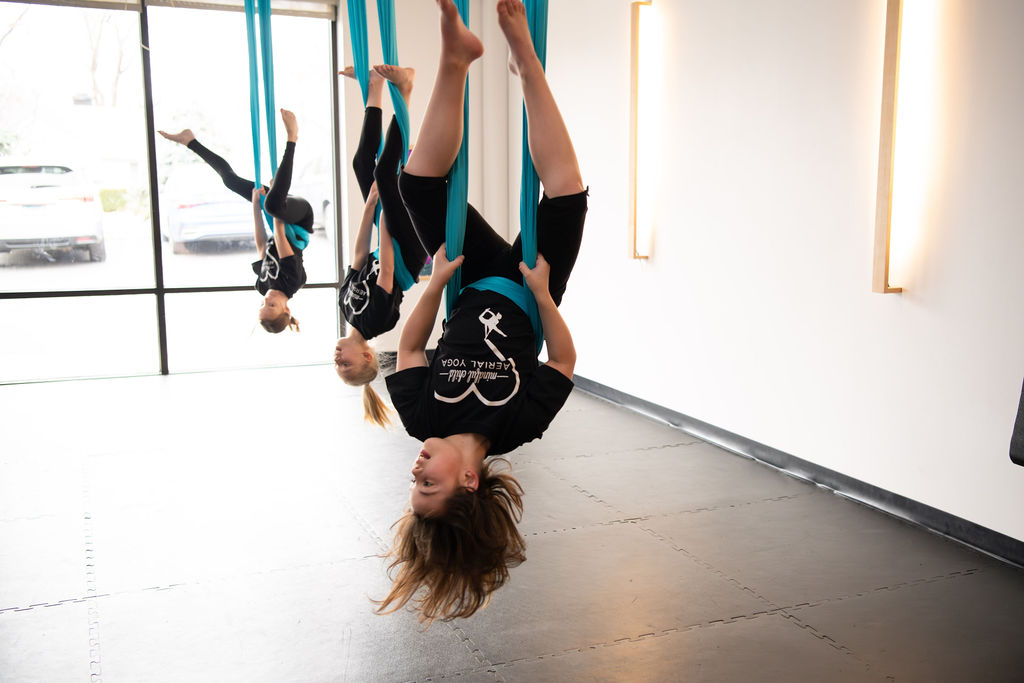
The advantages of aerial activities extend deep into the nervous system. The hammock provides a safe, womb-like environment that can profoundly affect a child’s mental state.
Sensory Integration and Therapy
Occupational therapists have long utilized sensory integration techniques using suspended swings to help children process sensory input. The yoga hammock acts as an advanced version of these therapeutic swings.
The sensory benefits of aerial silk activities and hammocks include deep pressure therapy. When a child is wrapped in the hammock, the fabric gently squeezes their body. This proprioceptive input releases serotonin and dopamine, calming an overwhelmed nervous system. Additionally, the swaying motion stimulates the vestibular system (the sensory system in the inner ear responsible for balance), helping sensory-seeking children find the input they crave in a safe environment. Because of this, we are seeing a massive rise in the therapeutic uses of circus arts in pediatric therapy, particularly for children with ADHD, Autism, and sensory processing disorders.
The Power of Inversions
You might be surprised to learn about the emotional regulation benefits of hanging upside down. When a child inverts, fresh, oxygen-rich blood rushes to the brain, stimulating the parasympathetic nervous system (the “rest and digest” network). This physical action naturally lowers the heart rate, decreases cortisol (the stress hormone), and can rapidly stop an anxiety attack or temper tantrum in its tracks.
Focus and Mindfulness Through Play
Children learn best through play. Instructors frequently use aerial hammock games for focus and mindfulness to keep kids engaged. A popular game involves “statues,” where children must strike a pose in the hammock and hold it perfectly still, silently counting their breaths. Another involves a “cocoon visualization,” where kids hide entirely inside the fabric, close their eyes, and listen to a guided story about floating on a cloud. These games teach children how to quiet their minds—a vital skill in today’s hyper-connected, fast-paced world.
Common Questions from Parents
If you are intrigued by aerial yoga for kids, you likely have a few practical questions regarding safety and age requirements.
Is Anti-Gravity Yoga Safe for Children?
The short answer is yes. But, like any physical activity, is anti-gravity yoga safe for children under all conditions? Not quite. Safety depends entirely on the environment. When practiced in a certified studio with professional rigging, crash mats, and instructors trained in pediatric anatomy, it is incredibly safe. Instructors teach children how to grip the fabric properly, how to transition between poses slowly, and how to spot their own limitations.
What Age is Best to Start?
Parents often wonder: what age can a child start suspended yoga? Generally, studios begin offering classes to children around the age of five or six. At this age, a child’s motor skills are developed enough to grasp the fabric, and their attention span allows them to follow multi-step safety instructions. Some therapists use hammocks with even younger toddlers, but always in a strictly one-on-one, heavily supervised clinical setting.
Beginner Poses and Home Setup
If your child is ready to try this exciting discipline, learning a few basic movements can help them feel confident.
Fun and Approachable Poses
When looking at beginner hammock yoga poses for elementary students, instructors focus on poses that build trust in the fabric while remaining close to the ground.
- The Cocoon: The child spreads the fabric out wide and lies completely inside it, like a sleeping bag. This is the ultimate relaxation pose.
- The Flying Superman: The hammock is placed across the child’s hip creases. Leaning forward with their feet lifted off the ground, they can stretch their arms out and safely “fly” parallel to the floor.
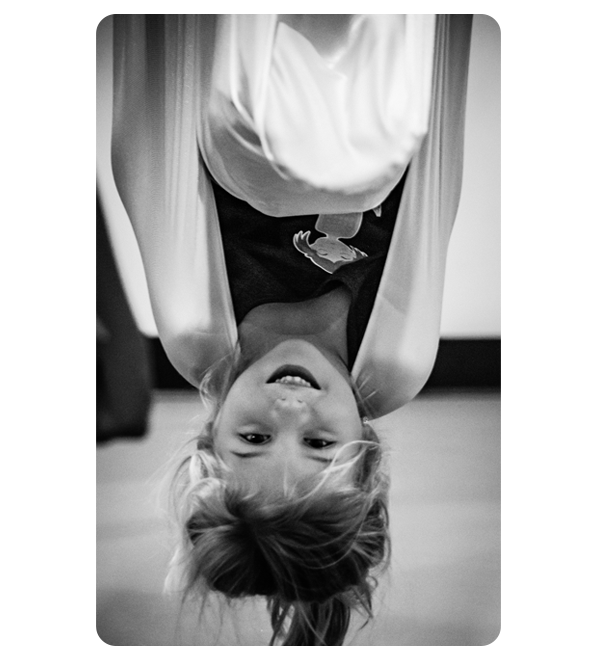
- The Bat : From a lying down position, the hammock is wrapped securely around the shoulders and arms with the hammock blanketed over the legs. The child leans back slowly until they are hanging upside down, in a plow position.
Practicing these and other fundamental aerial yoga poses helps children realize their own strength and courage, fostering immense self-esteem.
Bringing the Practice Home
After a few studio classes, your child might beg for a hammock of their own. Setting up a home yoga hammock safely requires careful planning. You cannot simply tie a hammock to a doorframe or an outdoor tree branch of unknown strength.
To ensure absolute safety, you must install the hammock into a structural ceiling joist or an exposed load-bearing beam using professional-grade hardware (like a mounting plate and heavy-duty carabiners). Many parents opt to hire a licensed contractor or structural engineer to drill the mounts. Additionally, always adjust the fabric so it hangs only a foot or two off the ground, and place a thick gymnastics crash mat underneath. Never let a child practice unsupervised at home.
The Takeaway
The growing popularity of suspended movement is not just a passing fitness trend. It represents a beautiful merging of play, physical conditioning, and profound mental health support. Whether you are looking for an outlet for an energetic child, a way to help an anxious child find peace, or a therapeutic tool for sensory integration, aerial yoga provides a joyous, holistic solution. By allowing kids to literally flip their perspective, they learn to trust their bodies, regulate their emotions, and soar to new heights in all areas of their development.